My dream career in the satellite industry started in March of 1980 at Satellite Communications magazine. In 1980 the industry was in the very early stages of development. Everyone knew that there was a future for the first commercial industry in space, but no one was exactly clear on what applications of the technology would be commercially viable.
The Early 1980s
At trade shows there was always the same group of professionals that were interested in finding viable satellite applications. It was from this group that the Society of Satellite Professionals International (SSPI) developed.
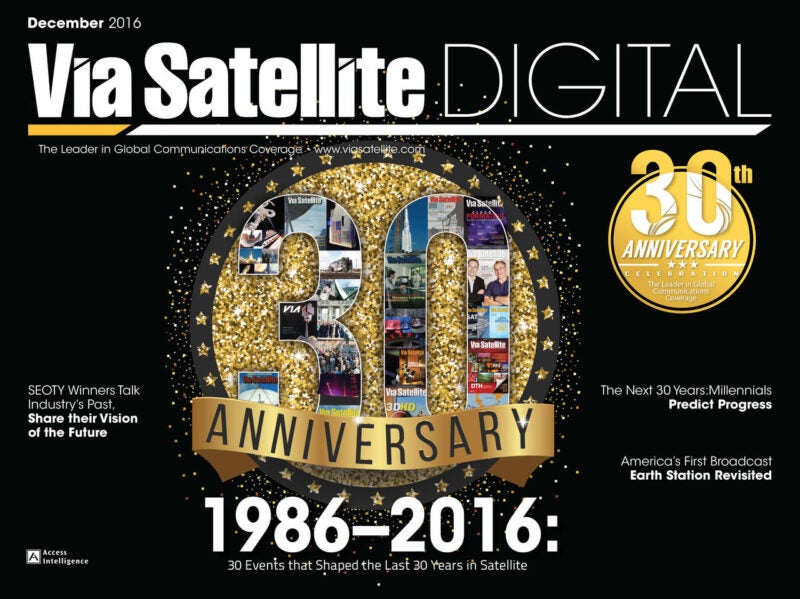
Explore the 30th Anniversary Edition Issue
Check out more from this issue and find your next story to read.
Satellite Video
Cable TV was the first real driver of video programming via satellite. HBO was the first major programmer to make the move. They had been bicycling tapes between the various head-ends when they pioneered the distribution of video programming via satellite.
Antennas
In the 1970s, it was technically necessary and required by the FCC for Television Receive-Only (TVRO) antennas to be at least 9 meters in aperture. In the mid 1980s the TVRO industry began to boom, with 8- and 10-foot antennas appearing outside homes across the U.S., especially in rural areas.
It took Hughes moving forward with DirecTV to get DBS off the ground. Charlie Ergen and DISH Network soon followed. Today both systems are successful reaching tens of millions of homes.
Long Distance Failure
One application that didn’t pan out was the use of satellites for long distance telephone calls. Satellite Business Systems (SBS) tried to sell cheap long distance service via satellite but the delay inherent in satellite transmission proved to make conversations impossible.
Too Many to Thank
There are so many people that I have to thank for help in getting Via Satellite launched and more throughout my career. Special thanks to Scott and Lynn Chase for the several times that I stayed with them while the magazine was at PPI. When I left the magazine to pursue other ventures I knew that Via Satellite was in good hands with Scott. VS