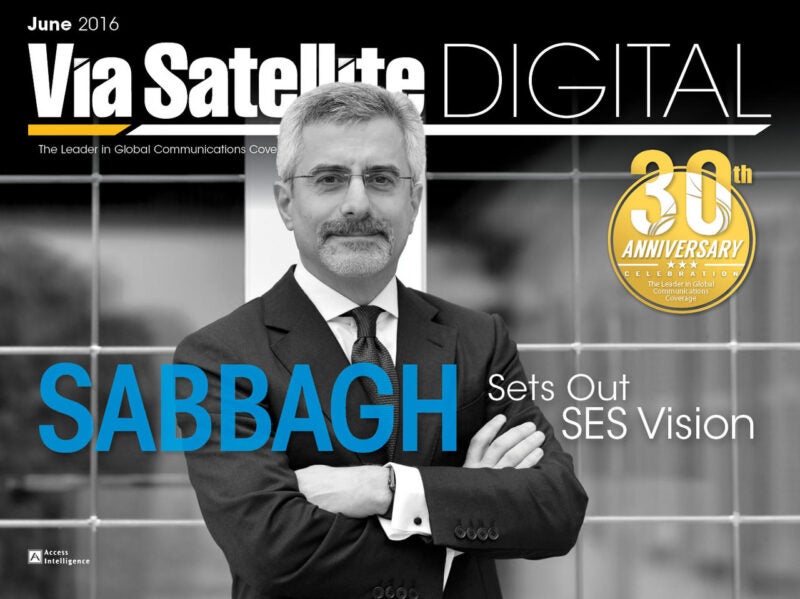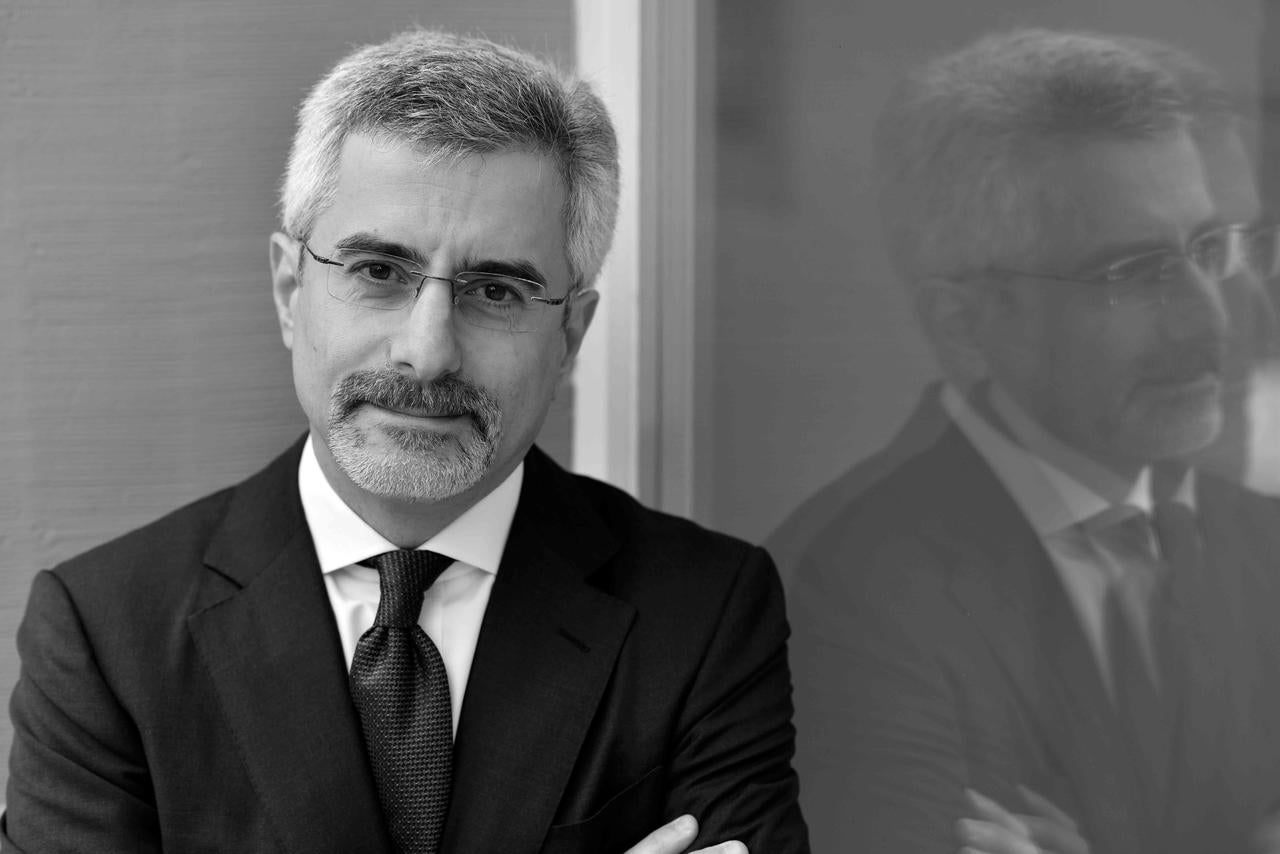
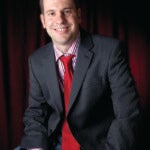
The first time I saw SES CEO Karim Michel Sabbagh speak was at a CASBAA event in Hong Kong, which was one of the first times he addressed the satellite industry. He is a gifted public speaker and spoke constantly of the satellite industry’s “right to play” in the global communications ecosystem.
VIA SATELLITE: Could you tell us the significance of becoming the majority owner of O3b Networks?
Explore the June 2016 Issue
Check out more from this issue and find your next story to read.
Sabbagh: The acquisition of a controlling stake in O3b further strengthens our global network and capabilities. We expand our reach and portfolio, augment our capabilities and enhance the foundations for sustainable growth. SES and O3b are highly complementary, and expanding SES’ global GEO network with O3b’s unique MEO fleet is a game changer for us, since it leverages tremendous potential and adds significant value to our assets and our start-up investments. We also significantly augment our capabilities to offer data-centric applications and serve customers with scalable, flexible and very differentiated solutions in the enterprise, mobility and government verticals.
VIA SATELLITE: What made you decide to pull the trigger on this deal now?
Sabbagh: The time was right because we reached the point where all the conditions we had determined earlier for such a transaction were met: a fully functional fleet in operation; successful customers proving commercial viability; a set of financial criteria showing economic performance; and securing the financing of a further eight satellites now under construction.
VIA SATELLITE: Do you think the new LEO constellations could impact the “GEO-MEO” play that SES currently has?
Sabbagh: Last year at SATELLITE 2015, I said that we should keep our options open in terms of what is the best way to deploy capabilities in space. The usage of a GEO, MEO or LEO satellite is not a value in itself but instead dependent on the applications it is providing for in the end. What we are seeking is the flexibility to deploy solutions when the opportunities arise in our different verticals, and to do that in a capital efficient and scalable manner. If this implies LEOs at some point, and if this pushes the frontier of thinking beyond what we know today and we discover new opportunities, we are ready to invest.
There may be some “secret sauce” we have not yet thought of in terms of how we can get GEO, MEO and LEO satellites to interoperate with one another and provide seamless connectivity to the markets.
VIA SATELLITE: At SATELLITE 2016, Dan Goldberg talked about going from skeptic to believer in terms of LEO. Are you now a believer too?
Sabbagh: I am a firm believer of continuous evolution and in SES’ core mission of connecting the world with superior satellite connectivity. We are positioned to lead this ongoing transformation. At SES, we are deeply analytical when it comes to LEO, especially when it comes to a decision on whether to deploy our own LEO layer. We are moving forward on all fronts.VS