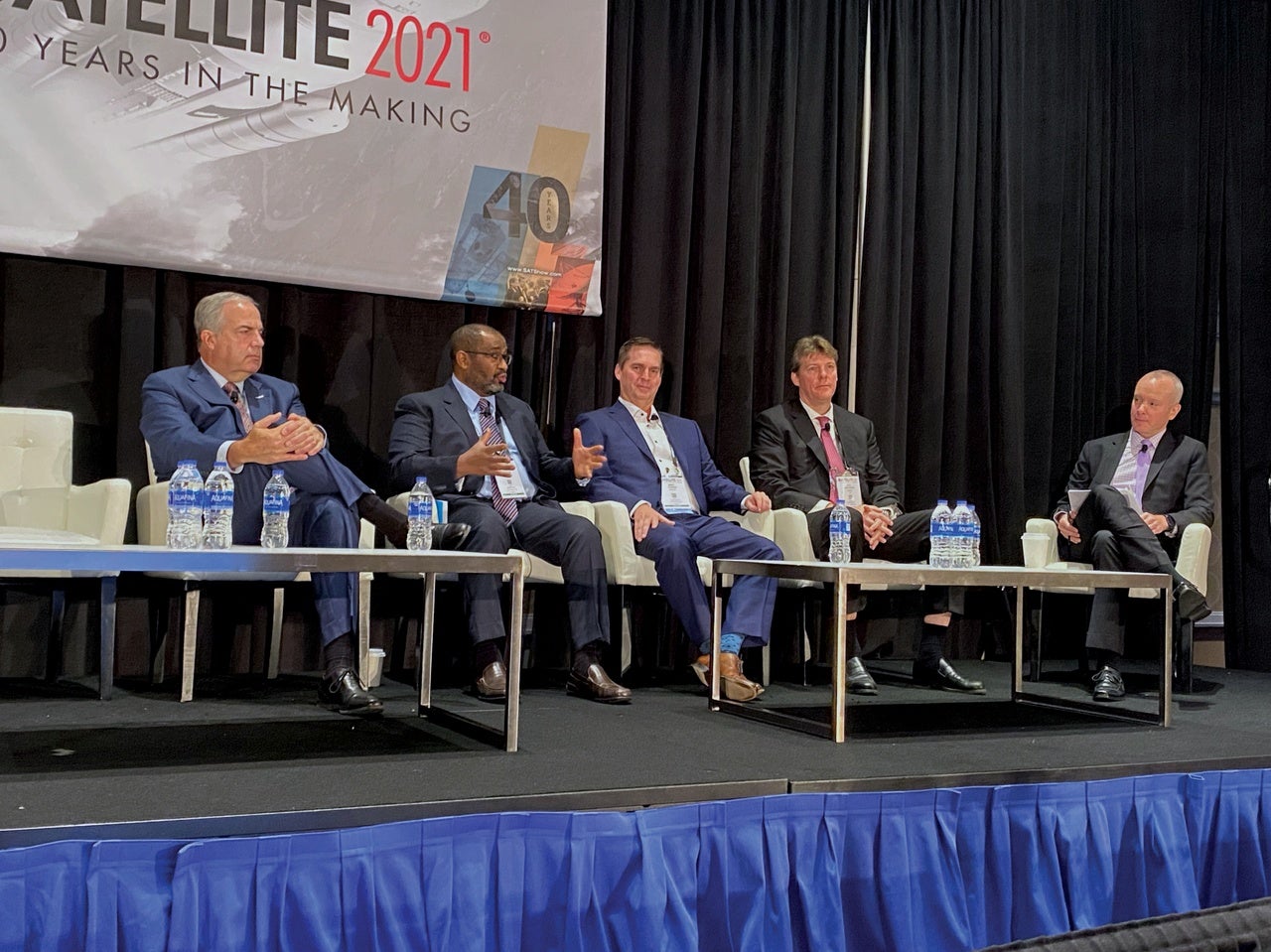

Execution and meeting customer needs are critical to making the business case for new LEO companies, major satellite operators said Tuesday at SATELLITE 2021.
OneWeb CEO Neil Masterson said his firm has raised $2.7 billion and the LEO constellation is now 44 percent built out, set to begin servicing customers from 50 degrees North to the North Pole by November. “The customers will decide who will be successful on the basis of the quality of service that we provide.”

Explore the Show Daily 2021 Day 2 Issue
Check out more from this issue and find your next story to read.
SpaceX CFO Bret Johnsen highlighted 21 launches and 1,700 Starlink satellites deployed, enough for global service except over the poles. “It’s clear that we are delivering a product that people want.” SpaceX has more than a half million deposits and orders and over 100,000 customers, and is now working with two telecom providers on the backhaul side. Key to profitability: “If we get the terminal cost down that is the holy grail for the consumer business case.”
Arabsat CSO Hadi Alhassani applauded new entrants but was bullish on GEOs: “GEO is here to stay.” He noted confusion among aviation customers unsure about GEO vs. LEO.
Iridium CEO Matt Desch — the panel’s elder statesman — noted Iridium has grown faster than other satellite firms over the last 18 months. He cautioned on SPACs: “It’s a very expensive thing to do. You lose a lot of value of your company.” On sustainability: “The real challenge — it’s not a challenge in the short run because there’s lot of money to throw at them,” but investors will eventually expect returns. “All the innovation being poured into LEO networks will benefit the entire industry. My next satellites are going to cost a lot less to build.” VS