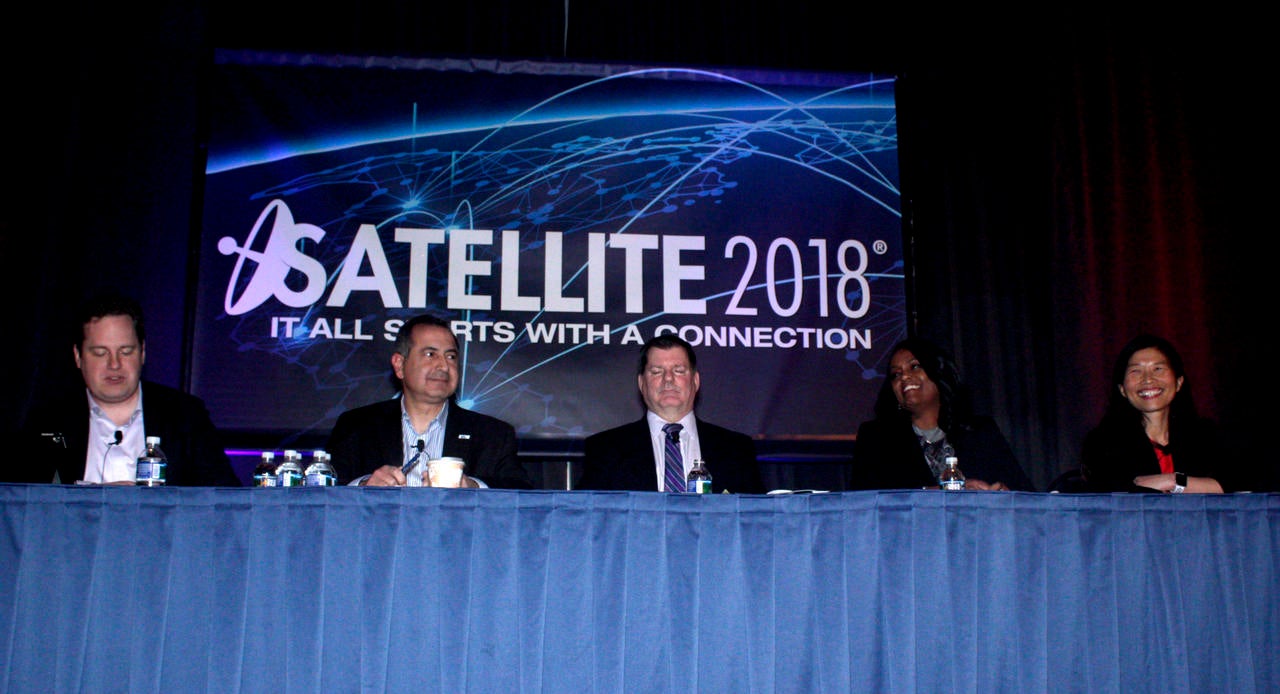

The primary function of on-orbit servicing regulations should be to enable the growth and expansion of the business rather than restrict it, said a panel of experts at SATELLITE 2018. The speakers emphasized the commercial risks of the U.S. losing its lead in developing on-orbit servicing technology.
Tahara Dawkins, director of NOAA’s Commercial Remote Sensing Regulatory Affairs Office, warned: “If we restrict this industry to a place where they’re not commercially viable, then this gets driven overseas.” She pointed to SAR services in the 1990s as a cautionary tale where a messy regulatory environment pushed investments overseas.
Explore the Show Daily 2018 Wrap Up Issue
Check out more from this issue and find your next story to read.
Al Tadros, SSL’s vice president of space infrastructure and civil space, said: “If our government is not taking leadership in this, others will, and the consequences of that are much more dire than any technical risk I see.”
Lisa Kuo, director of commercial programs at the Aerospace Corporation, cautioned against overly loose regulations. “When on-orbit servicing is in its infancy, we need to set clear guidelines and policies … until it’s at a point where everything is a lot more standardized.”
Tim Deaver, VP of SES Government Solutions, noted that solid regulatory frameworks reduce risk profiles for investors. Kuo warned regulators to plan beyond simple refueling: “We don’t want a set of regulations and policies that only apply to fueling services.” The true “holy grail” is on-orbit robotic assembly.
“Servicing is going to be quite varied,” Tadros said. “One of our programs, RSGS, is designed to have multifunctional robotic arms that can bring up new tools and equipment and conduct servicing that was not envisioned when we launched it originally.” VS