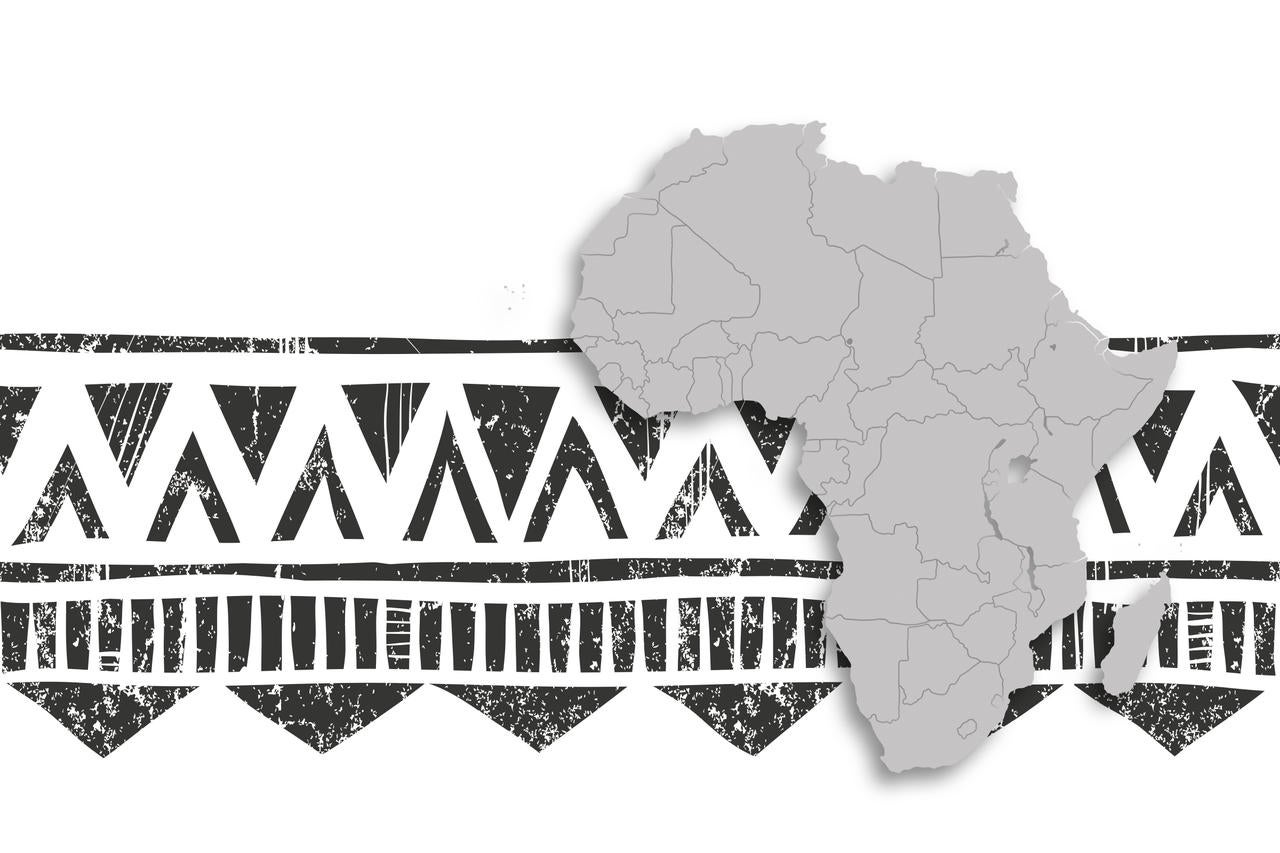

Africa is seen as the land of opportunity. With the majority of its population still struggling to get connected, and due to its sheer size, the continent is held up as a key region for growth. The continent is home to 1.2 billion people, with this figure expected to double over the next 25 to 30 years. It is the second largest, second most populous continent on Earth, yet it has the lowest Internet penetration rate at just 28.6 percent.
The need for connectivity is higher than ever before, driven forward by a range of applications. Enter the High Throughput Satellite (HTS) operators with spacecraft in Low, Medium and/or Geostationary Earth Orbits (LEO, MEO and GEO).

Explore the Middle East & Africa 2016 Issue
Check out more from this issue and find your next story to read.
African Demand for HTS: the Origins
The satellite operators that are in the process of delivering, or are seriously looking at an HTS offering, are only too aware of the pent-up demand that currently exists for a variety of applications in the African market. Enterprise is set to account for a good portion of African HTS demand.
“In both verticals demand for connectivity is stepping up in terms of throughput as well as latency,” explains Ronald van der Breggen, CCO of LeoSat. “Enterprises need direct, fast and reliable international connectivity. Telcos need high-throughput backhaul connectivity to upgrade to next generation networks.”
For satellite operators, finding balance in their capacity is a tricky tightrope walk. “The market as a whole sees Africa not as a three, four or five year opportunity but somewhere along the lines of 10 to 15 years. It is going to take us this long to get to the penetration levels that we see in the likes of developed continents,” says Brian Jakins, regional vice president of sales for Africa at Intelsat.
Oversupply and Falling Prices
Though satellite operators are extremely optimistic about future demand in Africa, the reality is quite starkly different. Even before new satellites and constellations of satellites launch, Africa is already dealing with a glut of capacity. According to NSR’s “Satellite Capacity Pricing Index,” capacity pricing has fallen by 2 to 3 percent every year since 2010.
GEO, MEO and LEO — Together in Harmony?
Operators in all orbits are quite firm in their belief that GEO, MEO and LEO are complementary and that they can most definitely work together, combining their sweet points to deliver the very highest quality and most cost effective service for different applications.
“Fundamentally, all constellations offer differentiators in terms of capacity, latency, security and footprints. We feel strongly that enough satellite capacity will remain uniquely tailored for certain applications, allowing for a healthy market,” says van der Breggen.
And Regulatory Hurdles?
Regulation and policy has for a long time been a sticking point for satellite operators doing business in Africa, but it seems that there is real motivation and call to action by regulators and policy makers to make the process of gaining HTS licenses faster and more efficient.
Perhaps this is finally the “perfect storm” in terms of Africa’s connectivity needs, and perhaps the satellite operators do have the perfect answer to meeting the needs of a continent hungry for capacity. VS